
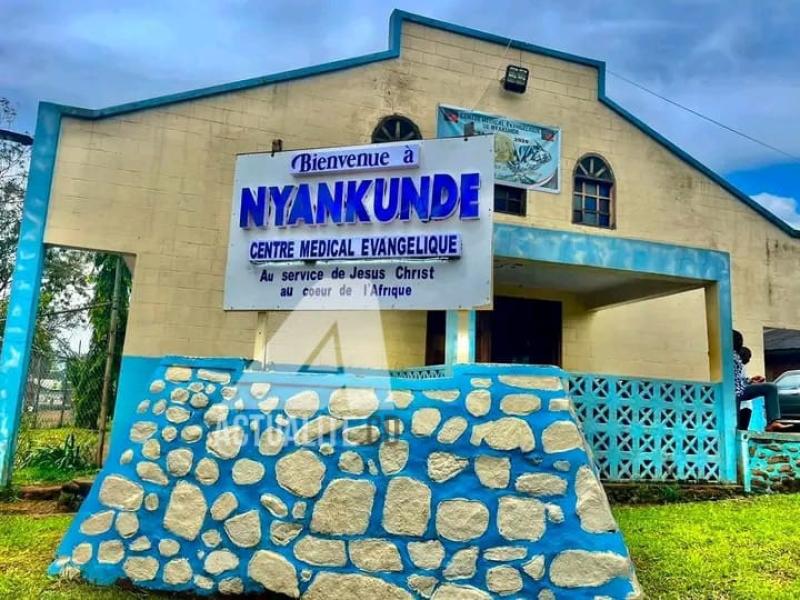
Violence erupts at Nyankunde Ebola hospital in Ituri


On July 15, 2026, chaos engulfed Nyankunde Hospital in Ituri Province, Democratic Republic of Congo, after angry residents stormed the facility treating patients with Bundibugyo strain Ebola. Doctors and humanitarian workers fled as the situation spiraled out of control.
The unrest followed two incidents: The death of Gen Herode (Herabo Tondabo), leader of FPIC Chini ya Kilima, who was fatally wounded in a bar attack and later died at Nyankunde Hospital. His fighters blamed government forces and retaliated with gunfire around the hospital.
The death of a pregnant woman who bled heavily and was denied immediate transfusion. Doctors insisted blood had to be brought from Bunia, 40 km away, rejecting relatives’ offers to donate. She died before supplies arrived, sparking fury among her family and neighbors.
Residents accused doctors of negligence, refused to accept explanations, and began vandalizing hospital property. Humanitarian staff from Samaritan’s Purse, FHI 360, Africa CDC, and the WHO fled to Bunia the next morning.
Four Ebola patients escaped into the community, raising fears of further spread, while three remained inside.
Outbreak declared May 15, 2026 By July 13: 2,011 infections, 754 deaths, 366 recoveries
Hospitals in Rwampara, Mongbwalu, and Nia Nia have also been attacked, with equipment destroyed and patients fleeing.
The violence at Nyankunde underscores the fragile trust between communities and health workers during epidemics. Misunderstandings about Ebola protocols—especially burial restrictions and blood transfusion rules—fuel resentment. Combined with militia clashes, this creates a volatile environment where health interventions are disrupted, worsening the outbreak.
About The Author


